SEO & AI Weekly, Nov 2–8: GSC Click Spikes & AI Mode 4 Ads
GSC logs desktop click spikes on pages 2–6; AI Mode shows up to 4 ads and follow-up ads; Shopify requires app IP lists; brand mentions top AIOs.
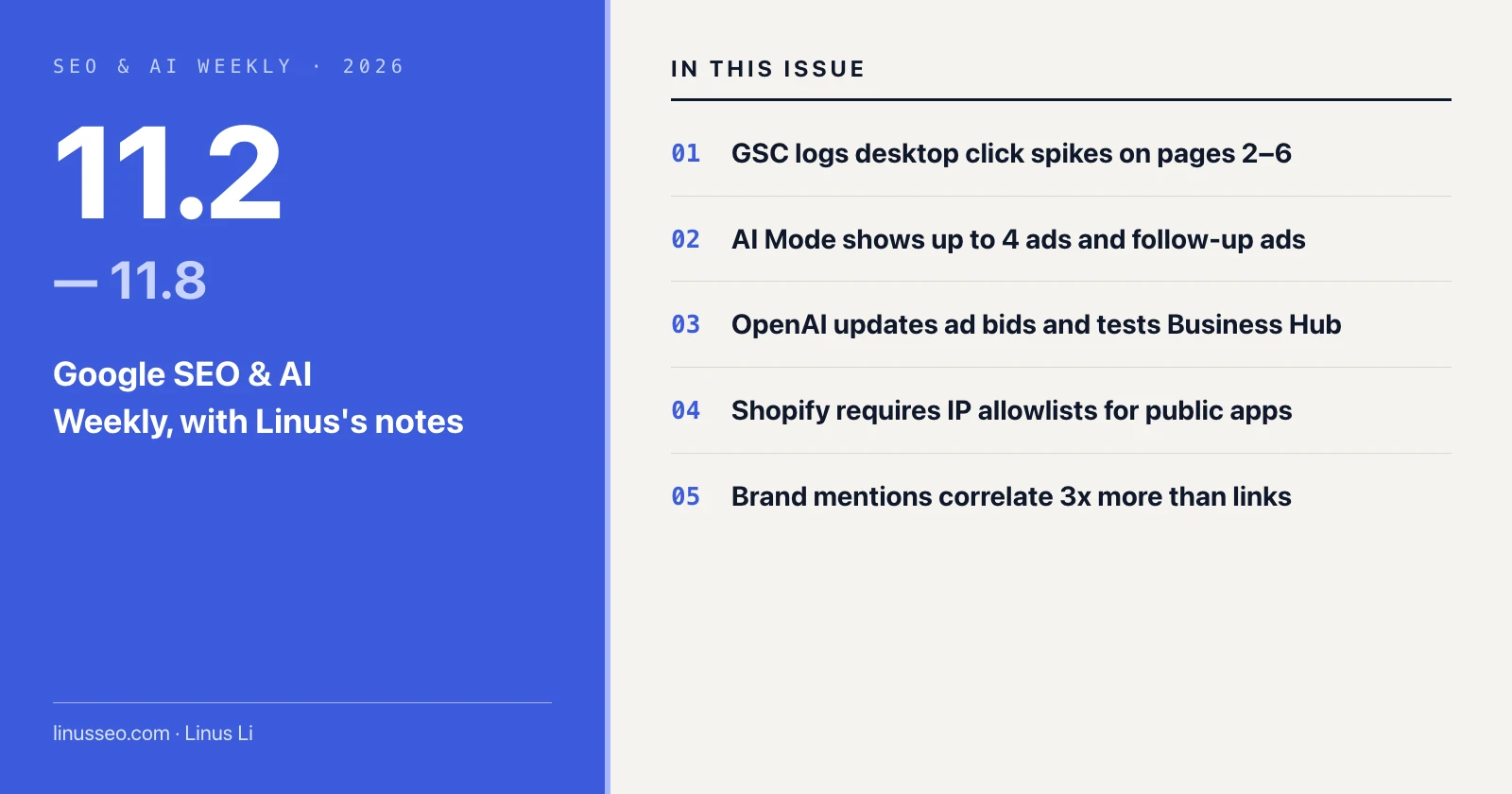
GSC logs desktop click spikes on pages 2–6; AI Mode shows up to 4 ads and follow-up ads; Shopify requires app IP lists; brand mentions top AIOs.
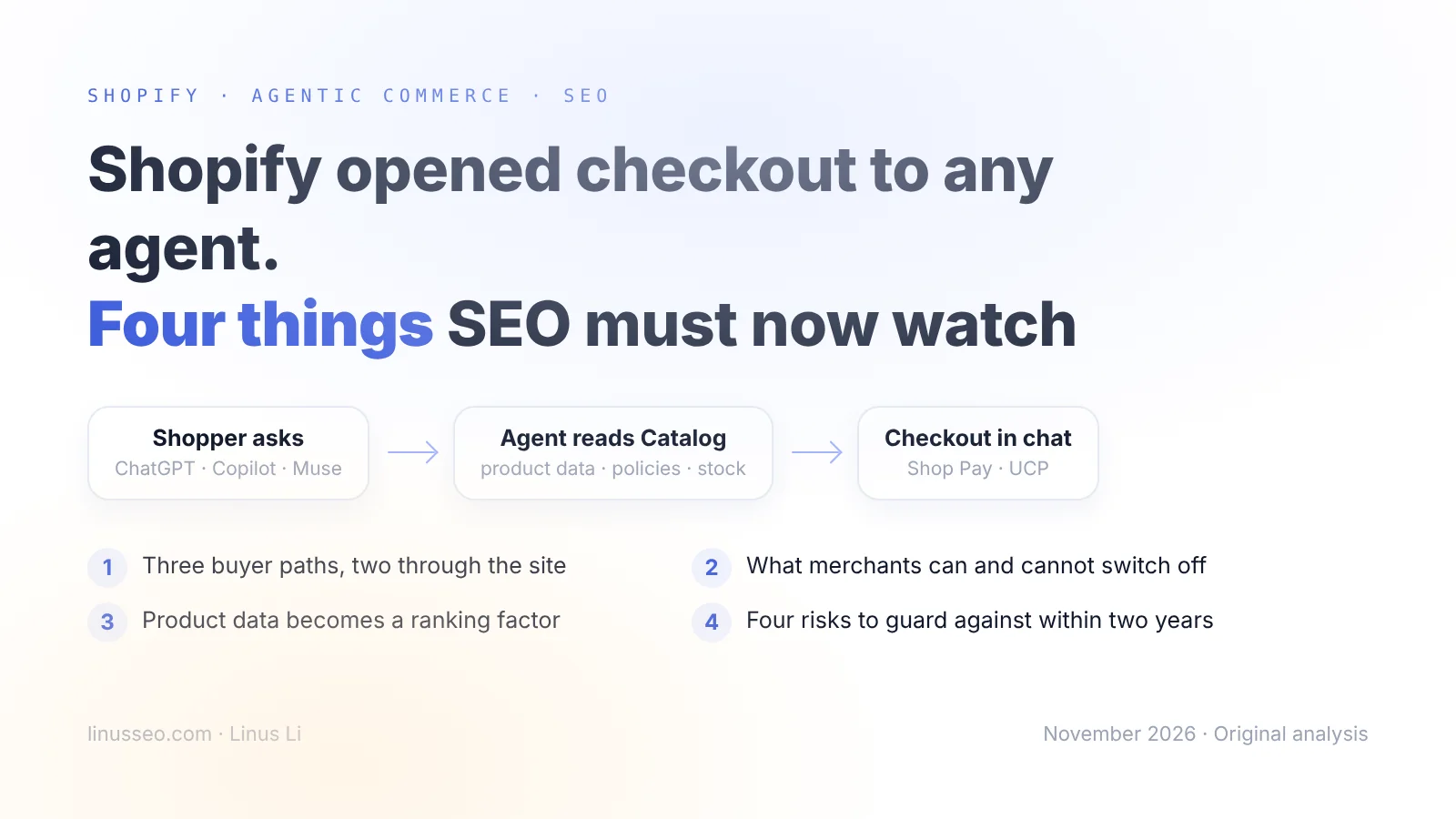
Suppose a Shopify merchant selling outdoor gear asks: after Fall ‘26, a customer asks ChatGPT, Copilot or Meta’s Muse for “waterproof hiking shoes under $200”, the agent lists products, adds one to the cart and pays with Shop Pay, and my website is never opened during the whole process. What is my SEO still for?
My conclusion is this: the object of SEO has changed, from “getting the web page ranked by a search engine” to “getting the product data read correctly, selected and bought by an agent”. The web page has not lost its purpose, because the Catalog’s data comes from the web page, ChatGPT’s checkout still returns to the store site, and the third-party reviews in AI answers also come from web pages. But the center of gravity for ranking has moved to product data, policy pages and platform settings, and these three items rarely appeared on an SEO checklist before.
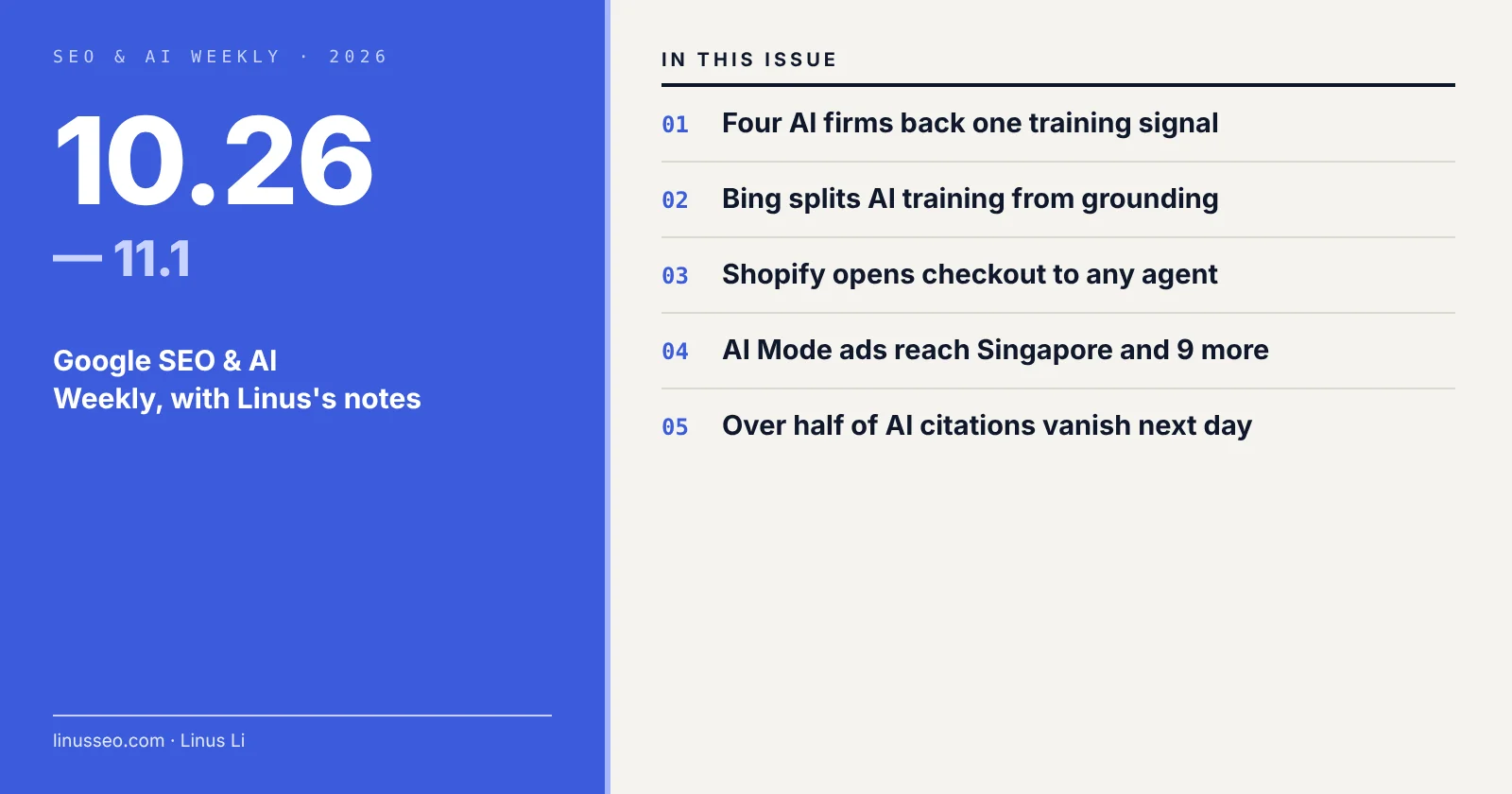
Google, OpenAI and Microsoft back one AI training signal, Bing splits training from grounding, Shopify opens checkout to any agent, AI Mode ads in 10 countries.
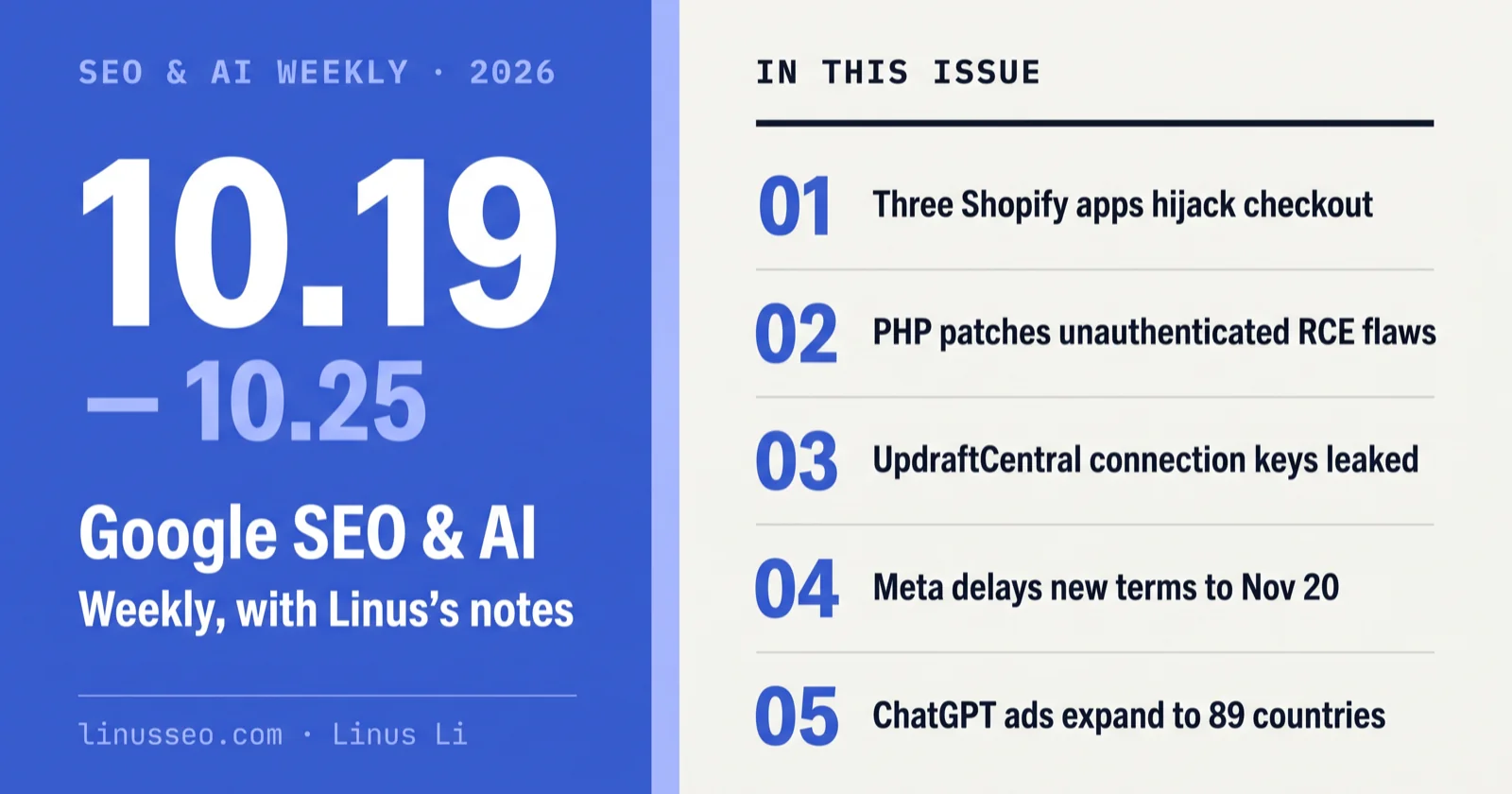
Three Shopify apps were hijacked at checkout, PHP patched two RCE flaws, Meta delayed its terms, and ChatGPT ads reached 89 countries.
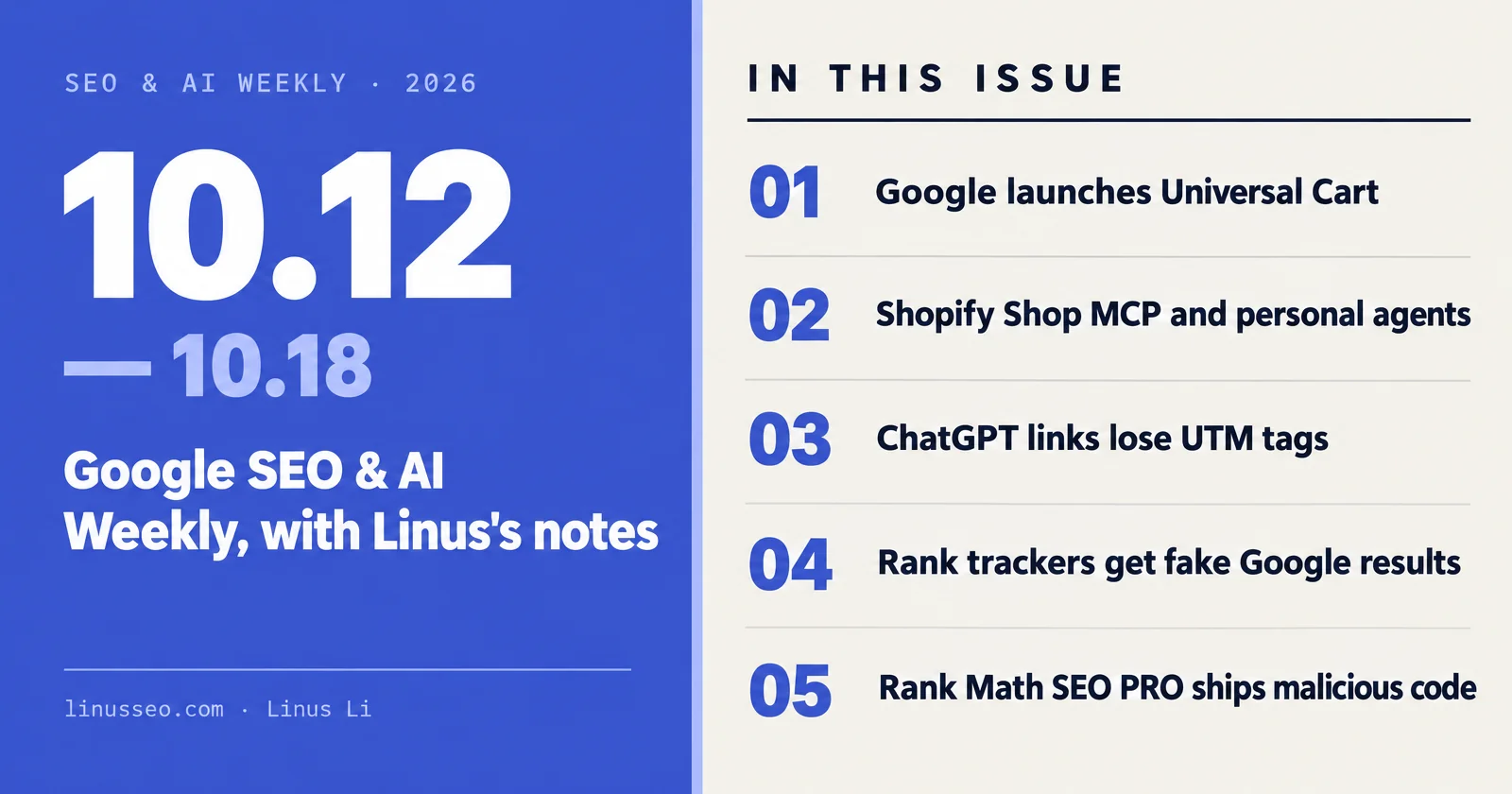
Google launched Universal Cart, Shopify released Shop MCP, ChatGPT links lost UTM tags, and rank trackers got fake Google results.
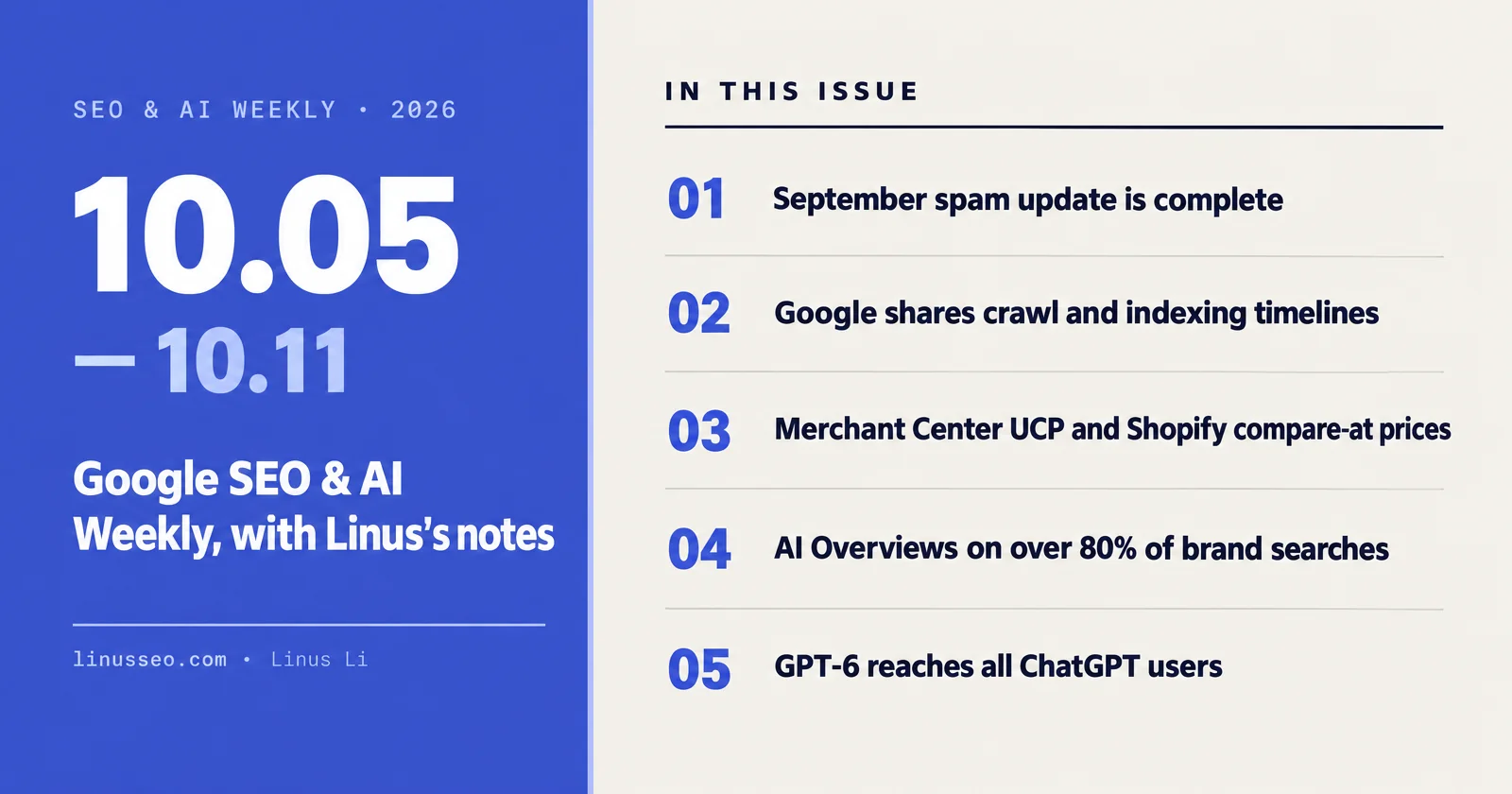
The September spam update finished, Google shared crawl and indexing timelines, Shopify added AI shopping data, and GPT-6 reached ChatGPT.
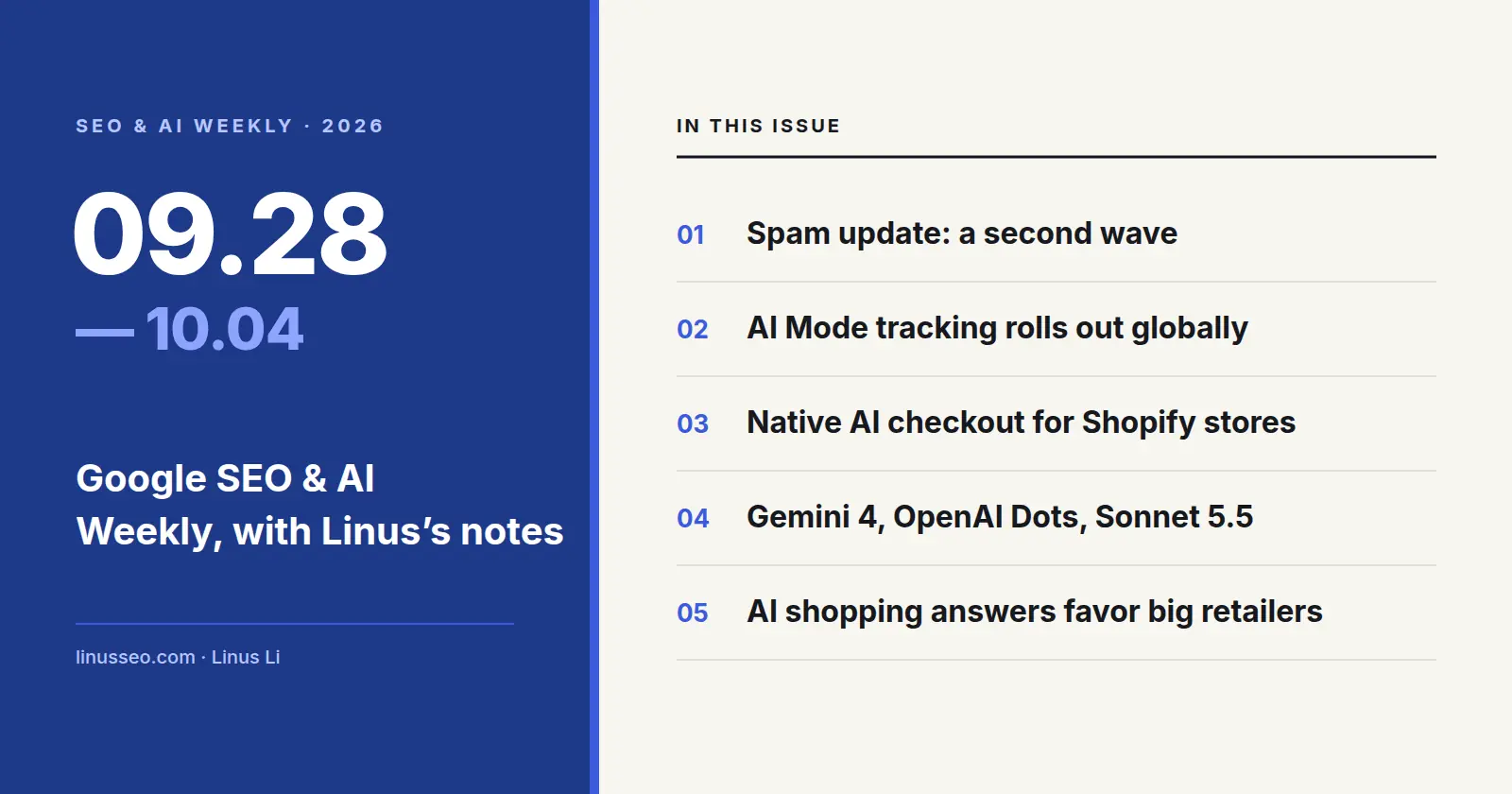
Google's spam update had a second wave, AI Mode began handling Shopify checkout, and Gemini 4 Argon and OpenAI Dots moved agents on.