Google SEO & AI Weekly Roundup + Linus's Take (Dec 5, 2023)
This article was originally published in Chinese on 2023-12-04 and has been translated into English. Read the Chinese version.
Here are this week’s highlights from Linus @ Jindouyun SEO:
- Google’s longest-ever core update is finally complete after 26 days! But are there aftershocks? The reviews update is still ongoing
- SGE patent revealed & SGE will leave testing in December and roll out worldwide
- Google revamps video search, bringing some changes to GSC
- New structured data: discussion forums, profile pages, and organizations — the trend behind them
- GSC officially retires the “Mobile Usability” report
- Bard starts to understand YouTube video content
- Google Search year-end recap — Merry December!
- More and more websites are blocking Google-Extended
- Sports Illustrated scandal: accused of using fake AI authors to publish AI-generated content, sparking public backlash
- SEO news digest
- AI news digest
Google’s Longest-Ever Core Update Is Complete After 26 Days! But Are There Aftershocks? The Reviews Update Continues
According to Google, the core update started on November 2, 2023 and finished on November 28, running for 26 days (previous ones typically took about 2 weeks):

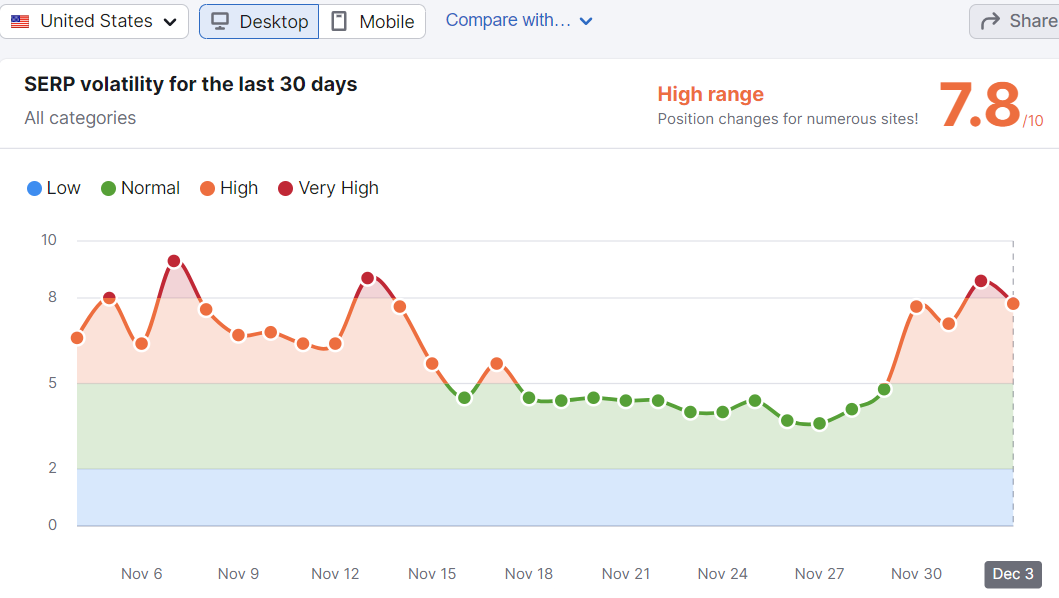
Just when everyone thought the dust had settled, there were aftershocks… Starting November 30, rankings began fluctuating heavily again. It’s hard to tell whether this is the broad rollout of the core update’s effects or the arrival of yet another update. (Google: “The December core update is here again?”) Here’s what the SEMrush Sensor shows:
Internally, Jindouyun SEO runs a “gossip system” dedicated to tracking Google algorithm changes. We plan to eventually build a public algorithm-tracking platform for e-commerce and B2B trade websites and share it with everyone — stay tuned~
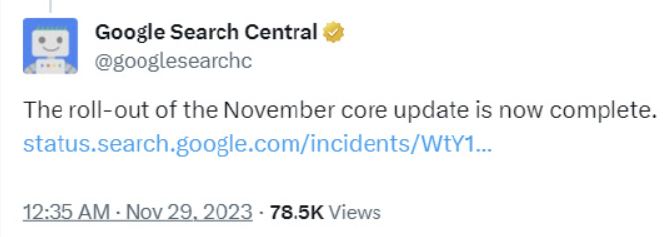
The reviews update is still rolling out. Google has said that going forward, reviews updates will become routine and will no longer be announced separately:
SGE Patent Revealed & SGE Will Leave Testing in December and Roll Out Worldwide
SGE is still in testing, but it will exit Search Labs in December 2023, with broad adoption planned for 2024. According to The Verge’s prediction, this feature — much like the launch of featured snippets before it — will cause overall traffic to every website to drop by 25%. However, that 25% is more likely to filter out low-quality traffic, while high-quality, valuable traffic shouldn’t change much. For many SEOs this may feel like a nightmare, but at Jindouyun SEO we see more hidden opportunities for high-quality traffic and conversions.
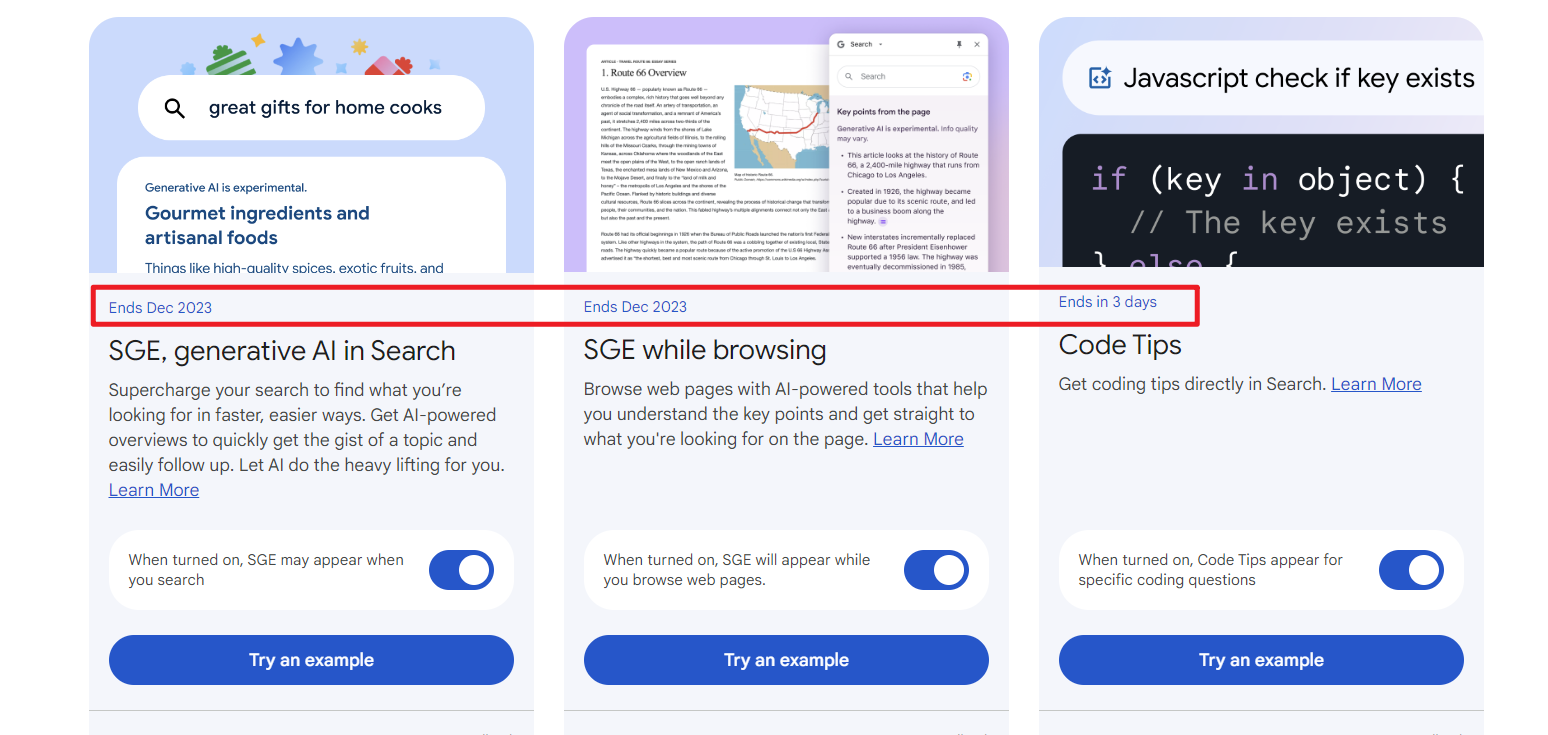
In addition, Code Tips will exit Search Labs in the second week of December.
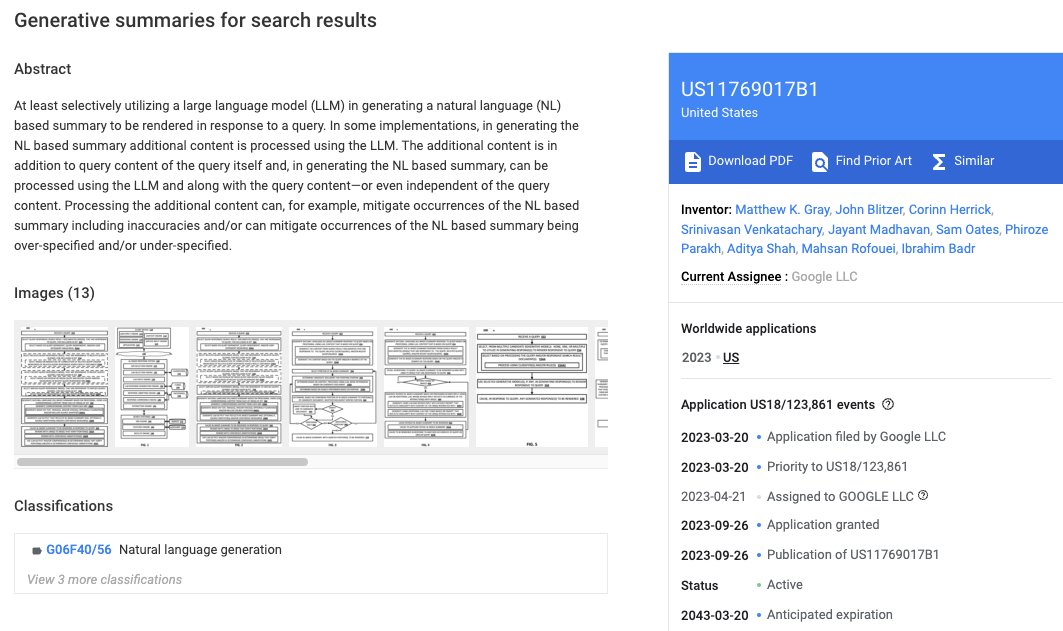
The patent for SGE-related technology was published around September. I’ll read through the underlying principles carefully, as they can inform adjustments to AI + SEO strategy for 2024 — though it certainly won’t contain anything like keyword ranking factors. Juan González Villa shared some detailed thoughts in this thread. Summary:
- The patent describes how to “selectively use a large language model (LLM) to generate a natural language summary in response to a user query”
- Multiple generative models can be used to create the summaries
Google Revamps Video Search, Bringing Some Changes to GSC
Google Search Console changes almost every week now — something that would have been unimaginable a year ago…
On December 4, Google announced that starting December 5 it would revamp video search to prominently feature videos, and that it may take up to a week to complete.
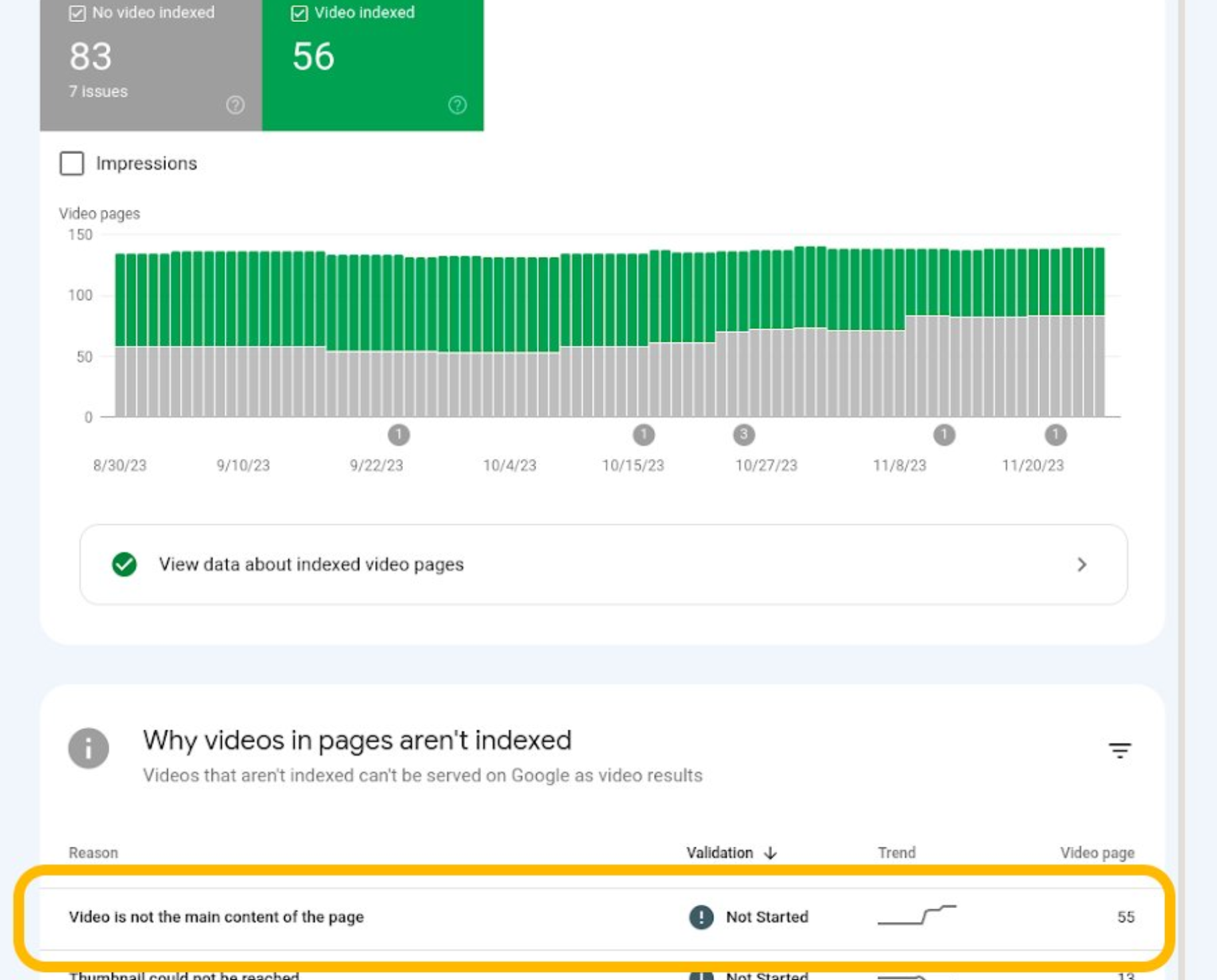
Over the past few months, the fix for the “Video is not the main content of the page” issue was to place the video above the fold so Google would index it. In this new blog post, Google explains which page types count as ones where the video is complementary to the page content rather than the main focus of the page:
- A blog post where the video is complementary to the text rather than the primary content of the page.
- A product details page with a complementary video.
- A video category page that lists multiple videos of equal prominence.
Google will also surface more specific issues, such as the video being too tall, too small, or outside the viewport, and noted that you may see fewer indexed video pages in GSC. Honestly, I don’t quite understand this change: if a video supplements the page’s core information and enriches it visually and in content, why shouldn’t it be indexed? Google is taking a pretty hard line here.
New Structured Data: Discussion Forums, Profile Pages, and Organizations — The Trend Behind Them
On November 27, 2023, Google announced that it would display profile page and discussion forum structured data in the SERPs:
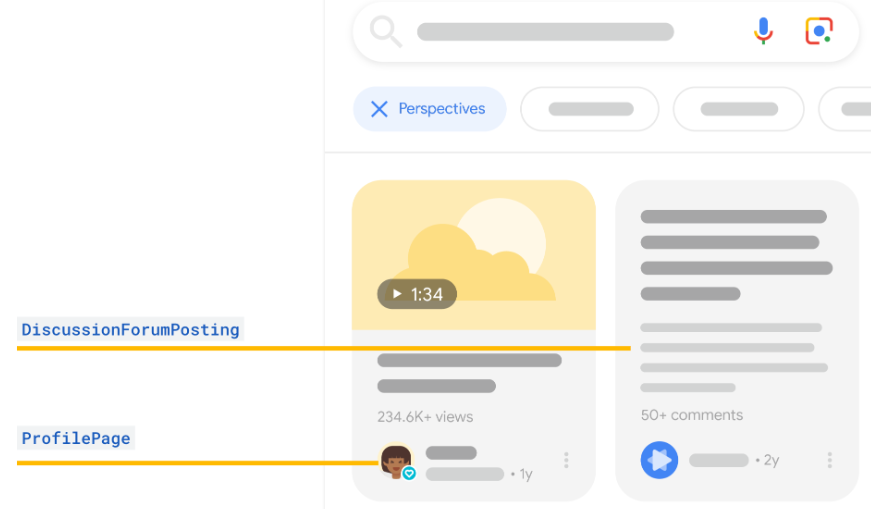
One thing to pay close attention to: Google intends ProfilePage to help searchers find sites where creators (individuals or organizations) share first-hand perspectives, and to let Google know the name or social media handle, profile photo, follower count, or popularity of their content. For forums, Google recommends choosing one markup type rather than using both. The difference:
- Q&A forums: If your forum consists of questions followed by answers, use Q&A markup.
- General forums: If your forum has a more general structure and isn’t strictly Q&A content, use
DiscussionForumPosting.
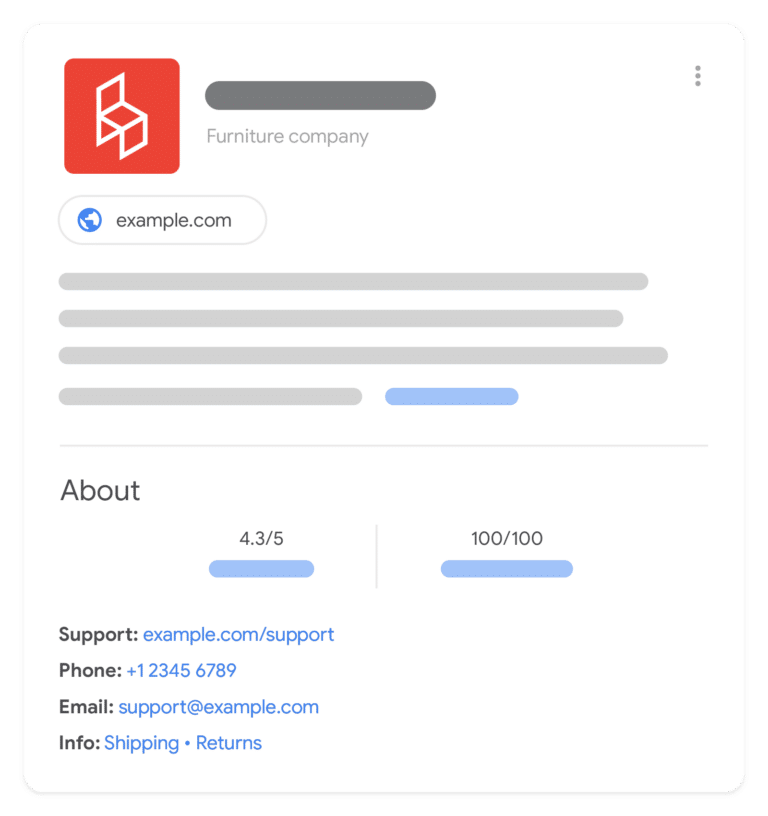
In addition, Organization structured data has received new field enhancements — the first change since this structured data type was introduced in 2013. Previously it may have supported only the logo and URL; now it adds name, alternate name, legal name, description, sameas, address fields, phone numbers, email, number of employees, founding date, DUNS, NAICS, tax ID and other ID numbers.
Going forward, searches for a brand or organization will show information in the SERP like this:
Regarding organizations, I’ve noticed some hidden connections related to the Knowledge Graph in the SERPs and to E-E-A-T:
- Technically, Google can use information from any crawlable website for its Knowledge Graph, but Wikipedia is widely considered the primary source.
- Around the middle of this year, there were signs that the share of information Google takes from Wikipedia started to decline (only the share). More entities now have Knowledge Graph panels, and more of them don’t use Wikipedia’s descriptions at all. Google seems to be trying to build some kind of individual entity understanding, citing information from many sources.
- Since the second half of this year, creating Wikipedia entries has become harder, and the number of trusted-chain PR sites has shrunk.
What does this mean? It’s worth thinking about…
Overall, Google says it will also add checks for these types to the Rich Results Test to help everyone validate them:
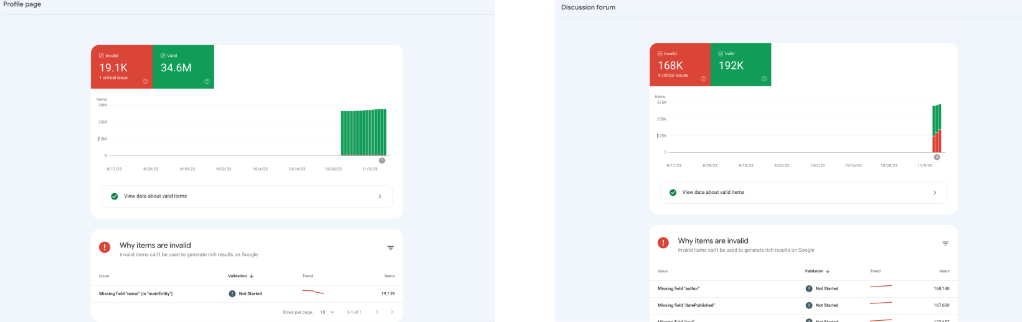
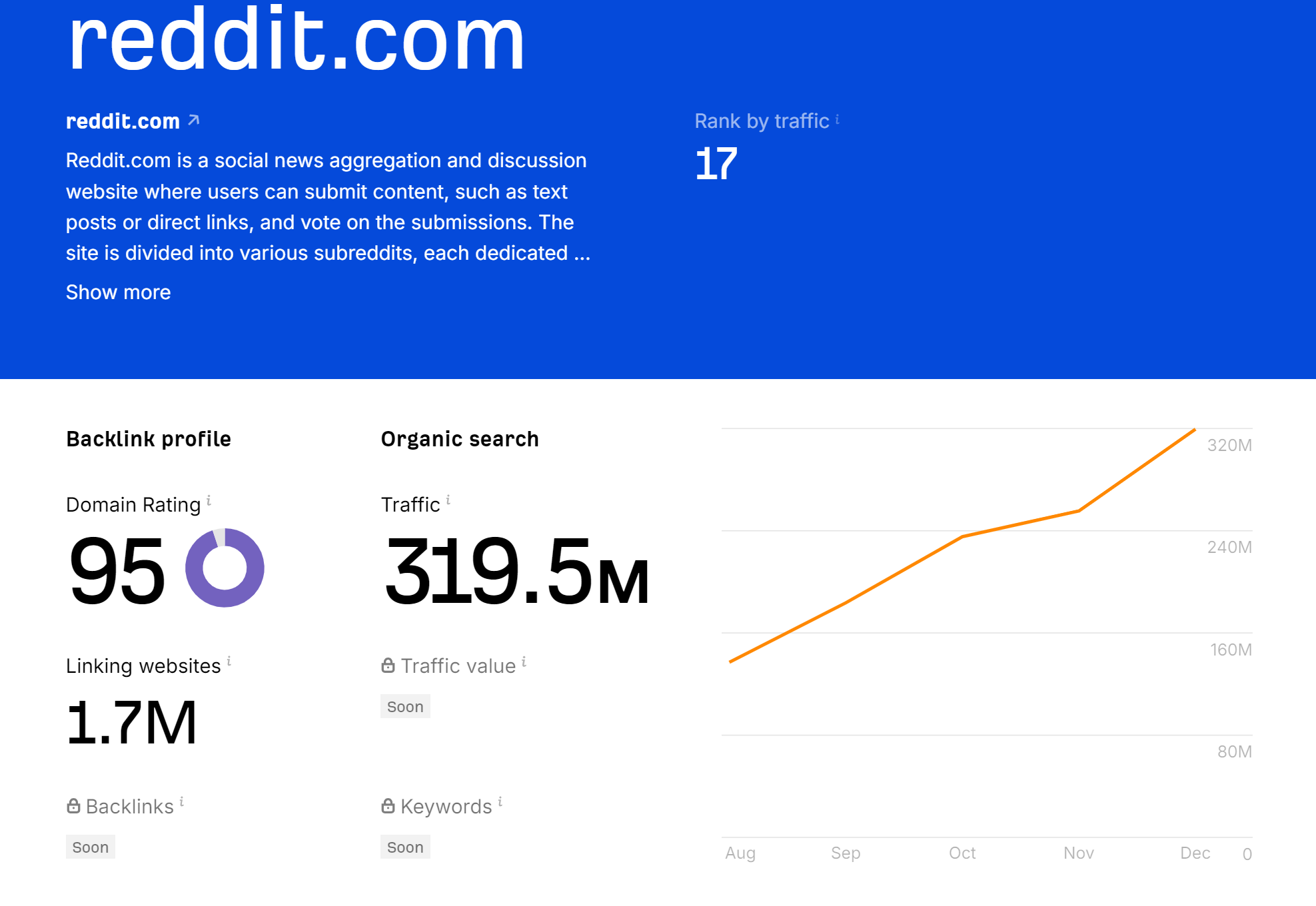
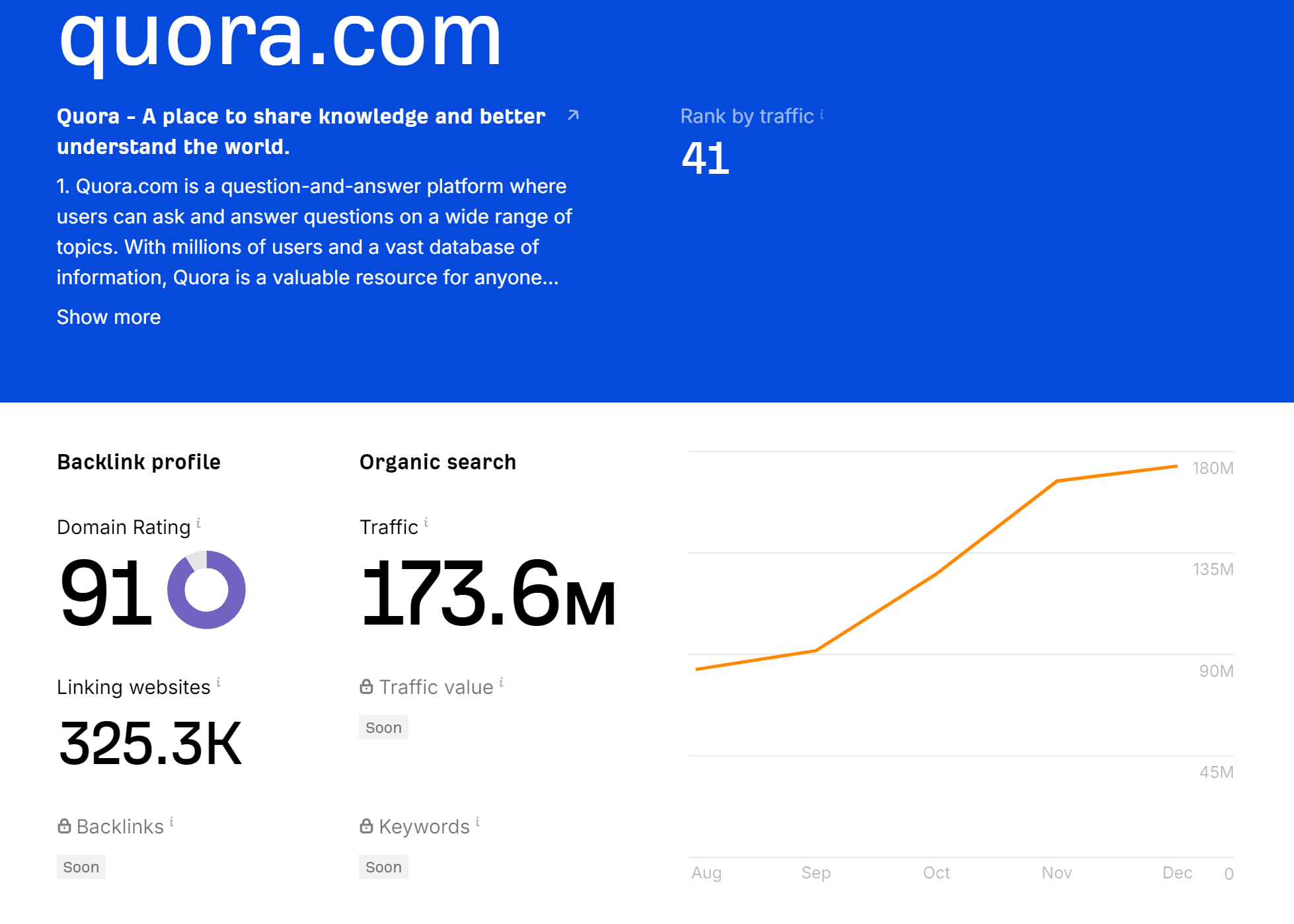
Clearly, in the future Google will likely strengthen trust signals (E-E-A-T) from real people, brands, and organizations, and all kinds of UGC will gain more weight. You can see this in the sharp organic traffic growth of Reddit and Quora after this year’s several helpful content updates:
GSC Officially Retires the “Mobile Usability” Report
As of December 1, 2023, Google has retired Search Console’s Mobile Usability report, the Mobile-Friendly Test tool, and the Mobile-Friendly Test API. Google first launched mobile-related reports 10 years ago (October 2014), when the mobile wave arrived. Today mobile-friendliness is the norm, and there are many mature tools such as Chrome’s Lighthouse, so it no longer gets a dedicated report.
This year, GSC has been simplifying its page experience guidance and steadily trimming metrics, and Google has explained why:
Q: Without the Page Experience report, how do I know whether my site provides a good page experience?
A: The Page Experience report was intended as a general guide to some metrics that align with good page experience, not a comprehensive assessment of all its different aspects. To provide a good page experience, take a holistic approach, including following some of the self-assessment questions covered in our Understanding page experience in Google Search results page.
Bard Starts to Understand YouTube Video Content
As an SEO, you need to follow Bard and SGE developments closely — it will make a real difference to your long-term strategy and vision!
Bard is gradually learning to understand videos and retrieve relevant information from them:
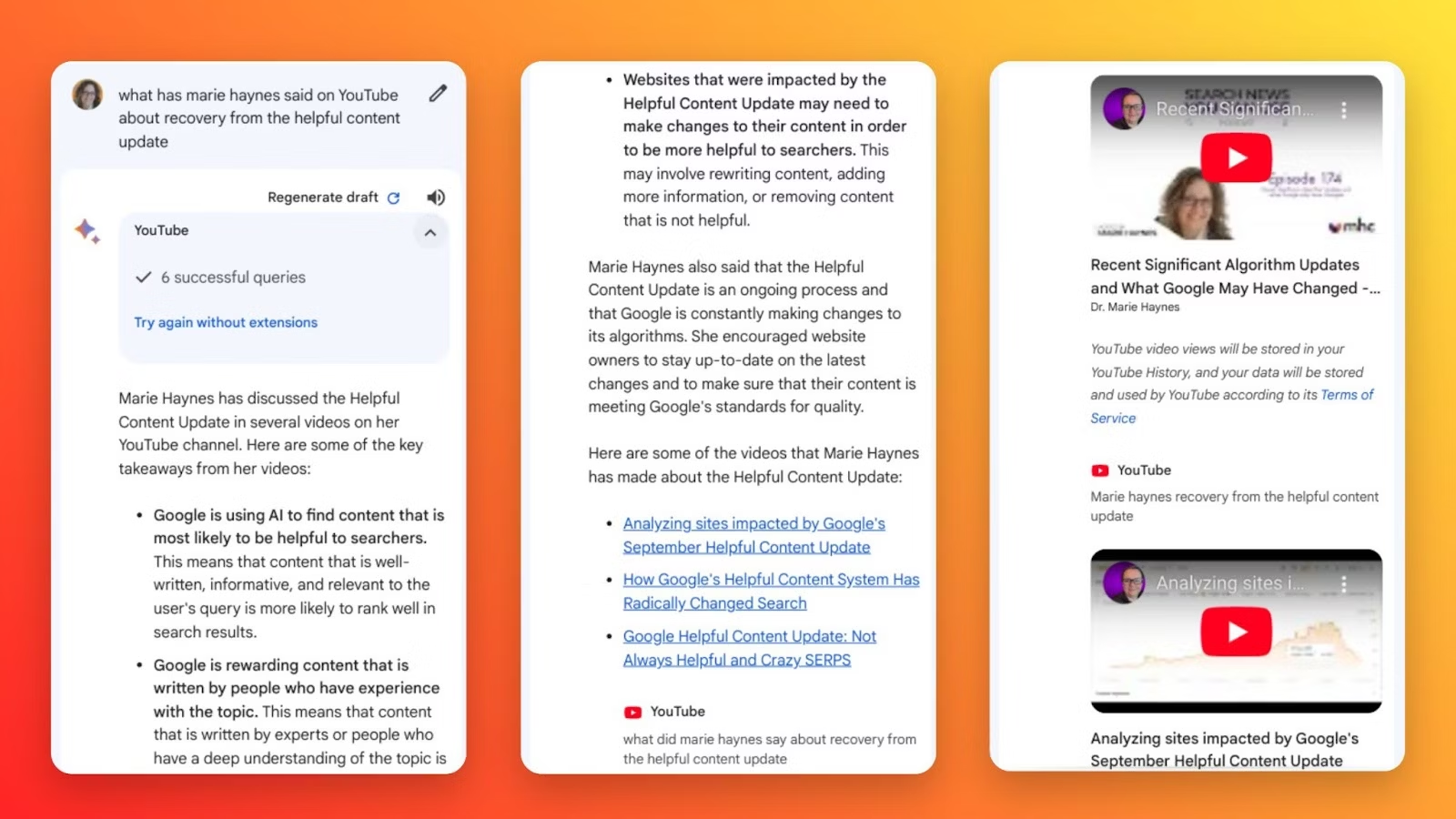
As early as March, Bard product lead Jack Krawczyk said Bard is not a search engine. But “we can’t stop users from using it like search.” As more and more people adopt Bard as a search source (I use it more often too), you can imagine the SEO landscape will change.
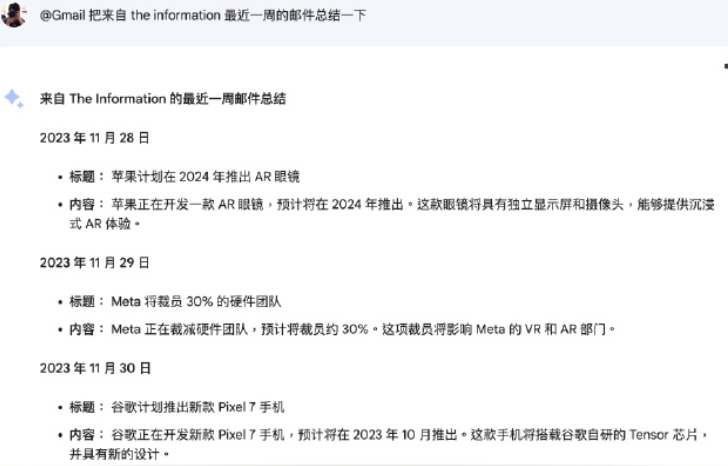
BTW, Bard can now also access your Gmail and quickly summarize emails. With a gold mine of data, Google may really do a lot of things differently.
Google Search Year-End Recap — Merry December!
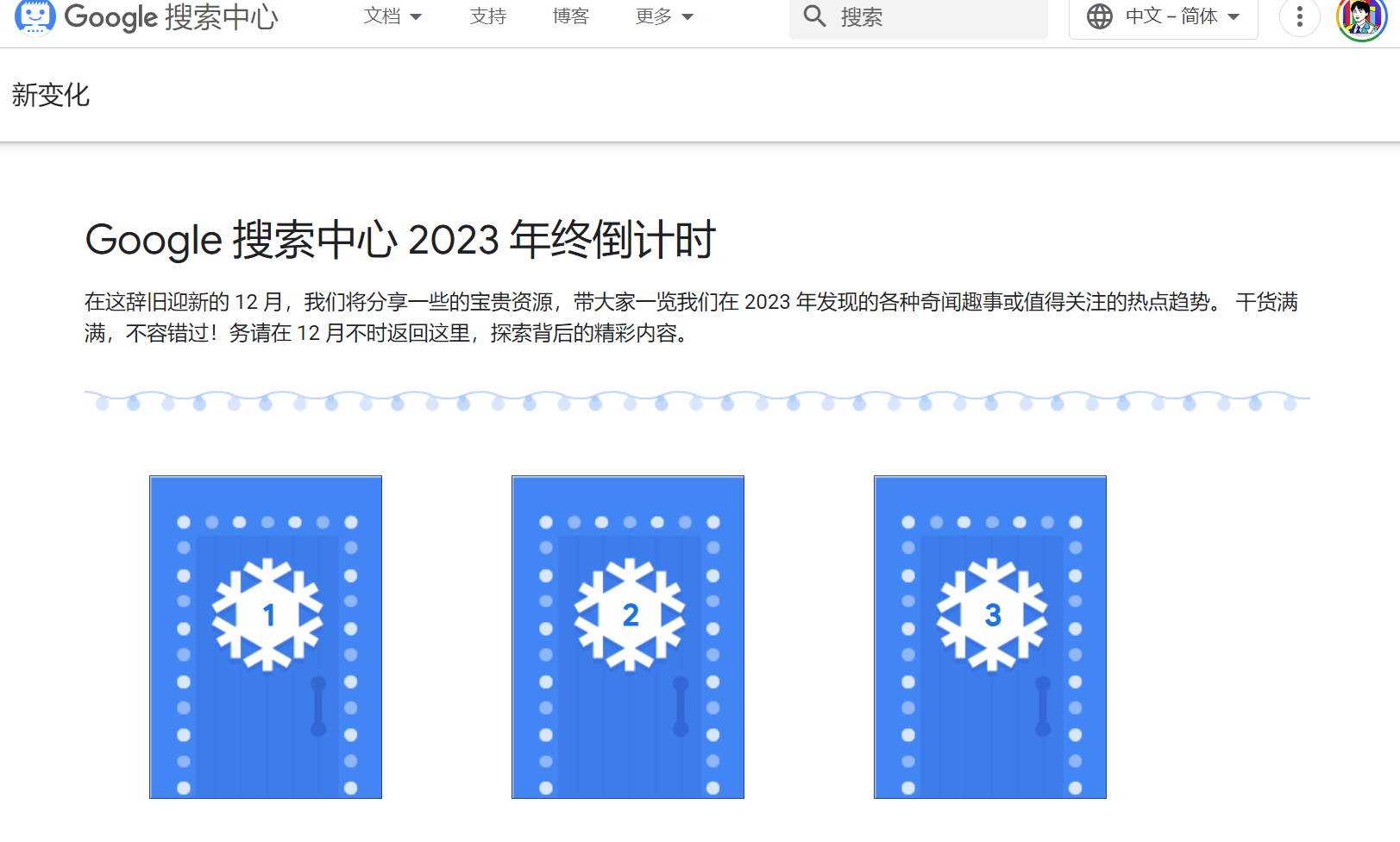
Google: “As December begins, we thought it would be a good time to look back at what happened at Google Search Central this year. To do that, we’ll be counting down a little each day, highlighting our blog posts, videos, podcast episodes, and other content.”
This is actually pretty fun — each day revisits one blog post Google published this year:
So much changed this year, with AI tools popping up endlessly, that every SEO and marketing/operations professional is unusually anxious. Take time to reflect and think things through…
More and More Websites Are Blocking Google-Extended
Of the world’s top 3,000 websites, more than 250 now block Google-Extended. This is the “standalone product token” Google launched on September 28 that lets you block Bard, the Vertex AI generative APIs, and future generations of models from accessing your content, preventing them from using your site’s data to train large models.
Just last week, The New York Times, Yelp, and 22 Condé Nast properties chose to block Google-Extended. There’s still plenty of debate over this. My view is that open information on the internet will always end up being used for training. Large websites certainly have their own traffic channels, but for small and mid-sized sites, perhaps going with the trend is the better choice?
Although you can block Google-Extended in robots.txt, that won’t stop your content from appearing in Google’s SGE, nor will it stop Google from using your content to train SGE. To block it completely, you’d have to block Googlebot (which effectively means giving up on Google SEO). However, you can use nosnippet (similar to noindex) to opt out of SGE overviews.
Sports Illustrated Scandal: Accused of Using Fake AI Authors to Publish AI-Generated Content, Sparking Public Backlash
Sports Illustrated is a long-running American sports magazine first published in August 1954. It was founded by Henry Luce and Andreas Hale, who were also behind Time and Life magazines. According to Similarweb, it received 386.2M visits over the past three months.
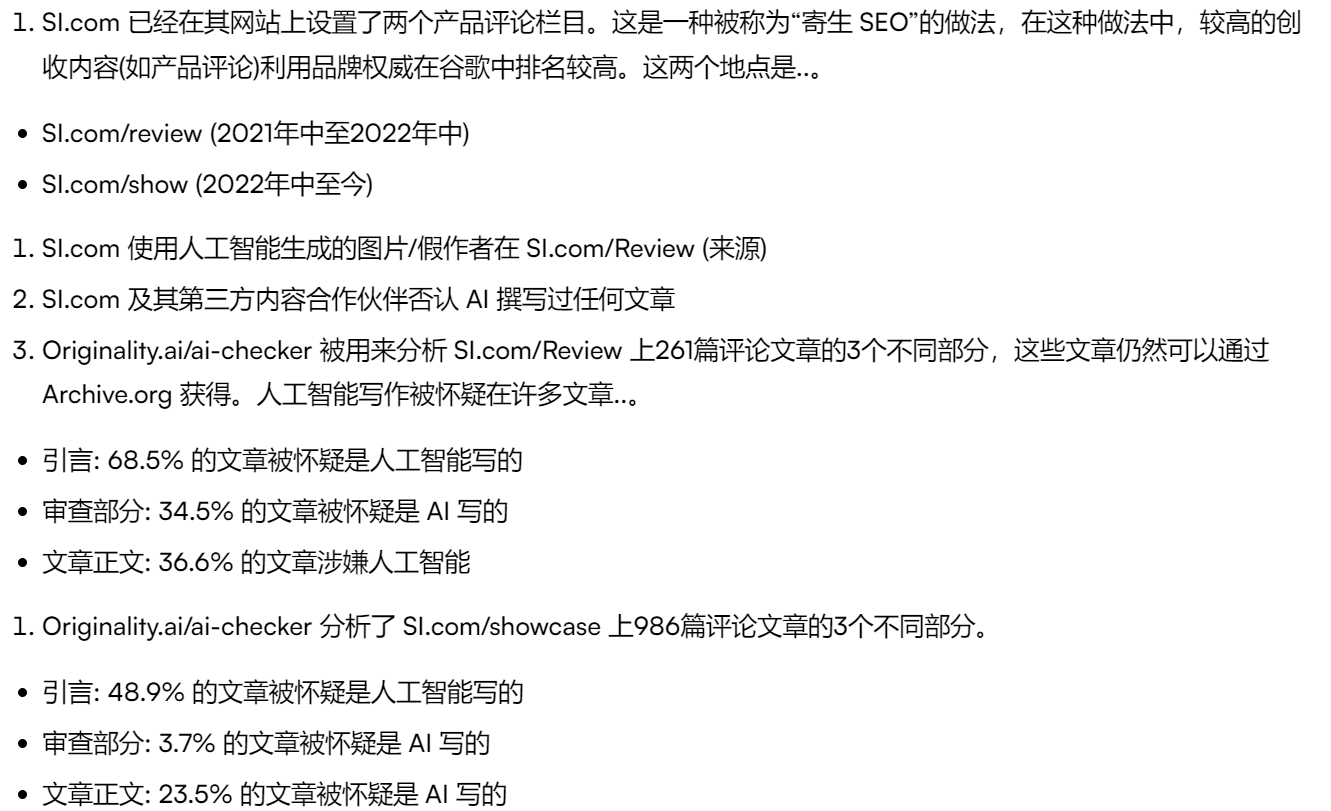
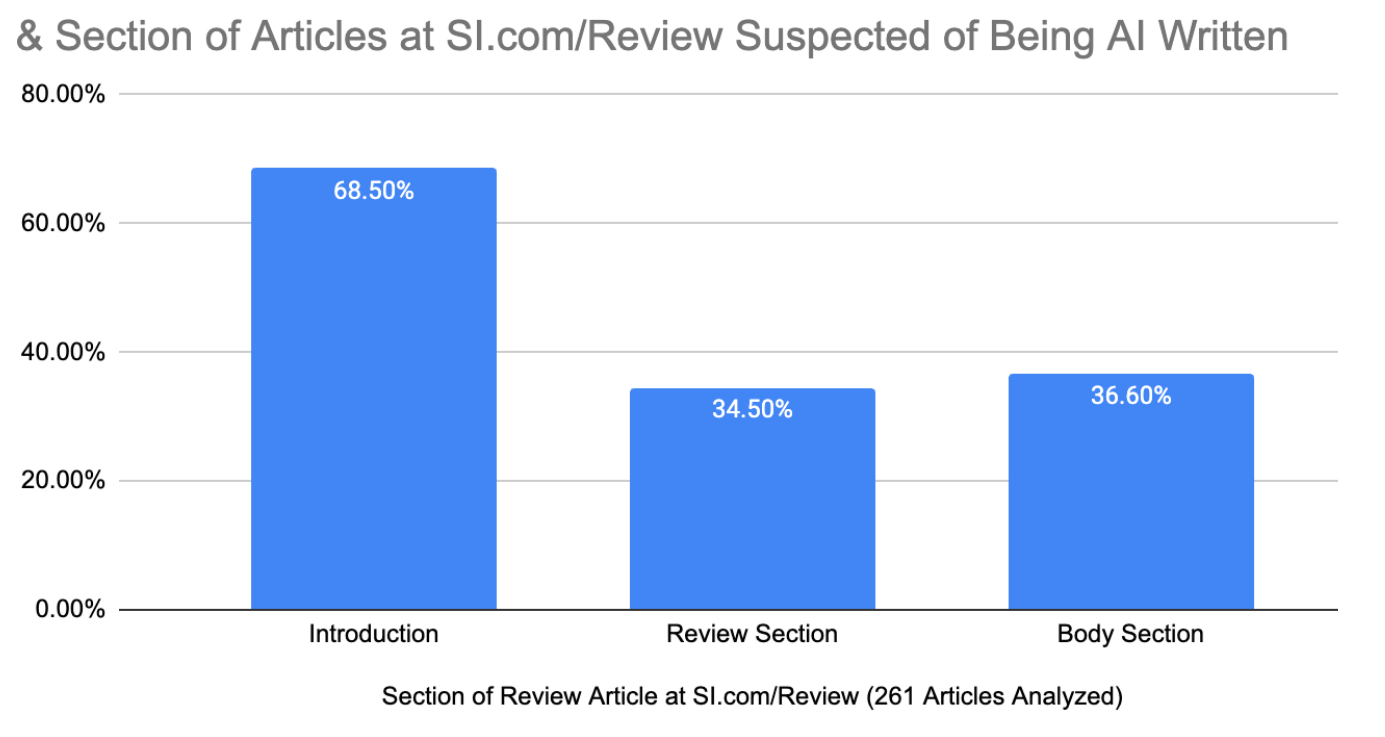
In a November 28 report, Sports Illustrated (si.com) was found to have a large number of authors who were actually bots. This is based on Originality.ai’s report, which contains a very thorough investigation:
Facing public backlash and the report, The Arena Group immediately took down all the AI content:
Before this, when The Arena Group first announced its move into AI, CEO Ross Levinsohn promised in an interview with The Wall Street Journal that the quality of its products would be excellent. (Doesn’t look so excellent now.) But AI is actually quite obvious — once you’ve seen enough AI images, you can instantly tell whether a headshot is real. The report also cites many awkward phrasings, all telltale signs of AI:
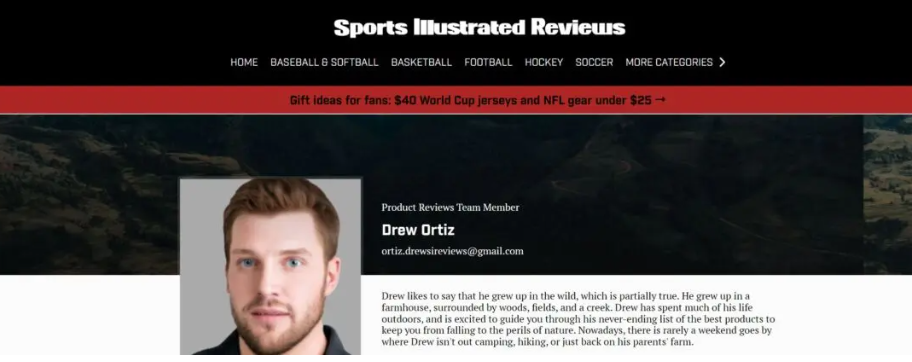
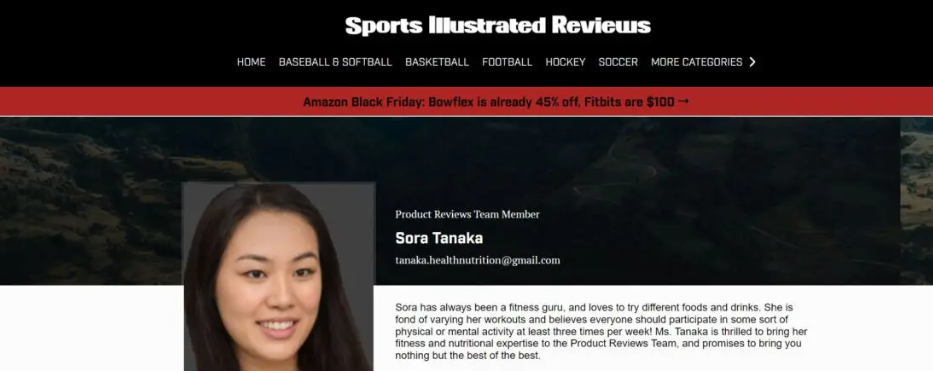
Futurism commented that the AI content marks a huge fall for Sports Illustrated: over the past few decades, SI.com won countless National Magazine Awards for its sports journalism and for publishing works by literary giants. But now, under The Arena Group’s management, fake authors are conjured out of thin air, with equally fake bios and expertise, to win readers’ trust, and used to push AI-generated buying guides that make money through affiliate links to products — which is dubious and unethical.
If a once-respected news outlet can be reduced to an AI content mill, news organizations lose their authority. I singled this story out to illustrate the current abuse of AI, and the values and good sense we should uphold as SEOs. We SEO practitioners should never mass-produce junk on the web. SEO is about making websites better and traffic better, and even improving the web as a whole. For more details, click the report links above to read further.
SEO News Digest
Here’s this week’s roundup of SEO reads worth your time:
- Quality rater and algorithmic evaluation systems: Are major changes coming? - Search Engine Land: Major changes may be coming to how search engine algorithms are evaluated. Bing is using GPT-4 for relevance assessment in place of human raters (over the past few decades there have been large numbers of human quality raters). Search engines may gradually replace people with machines for algorithm evaluation. This can greatly increase the scale and efficiency of evaluation and may lead to more frequent algorithm updates, but it may sacrifice some accuracy and quality.
- Word to Your Mum: Managing the Future of SEO Without Keywords - Cindy Krum,, MobileMoxe: The future of SEO — managing without keywords. A discussion well worth listening to.
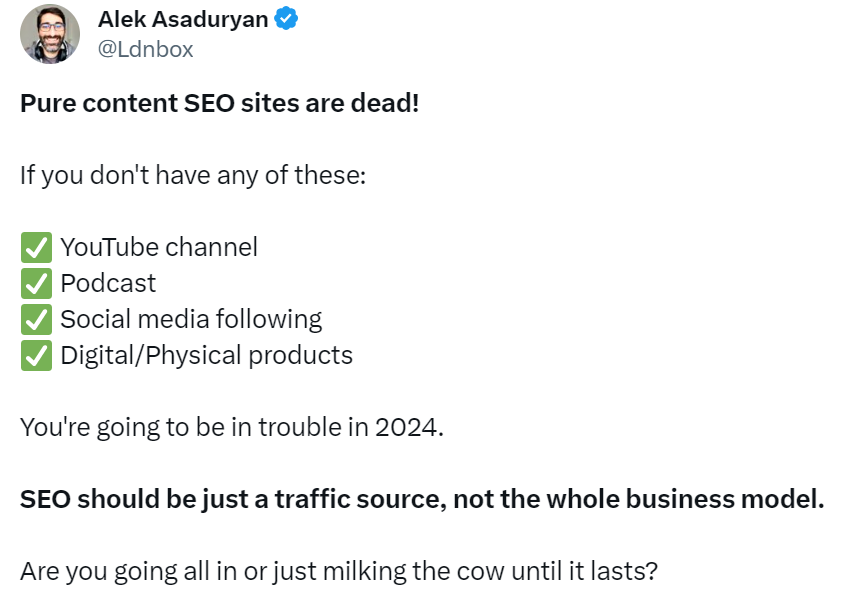
- Pure SEO content sites are on their way out; sites without social media and off-site presence will gradually wither. I completely agree, and Jindouyun SEO is transforming too:
AI News Digest
Here’s this week’s roundup of AI and tech news relevant to SEO & operations:
- OpenAI’s GPT Store will be delayed, but you can still use the site: operator to dig up interesting GPTs, then cross-check their popularity with Similarweb and X. There are also quite a few GPT directory sites out there — give them a try.
- Perplexity, the star of AI + search, has released online LLMs with real-time information. As a long-time Perplexity user, I find it very useful for correcting hallucinations and thinking through information, and I recommend giving it a try.
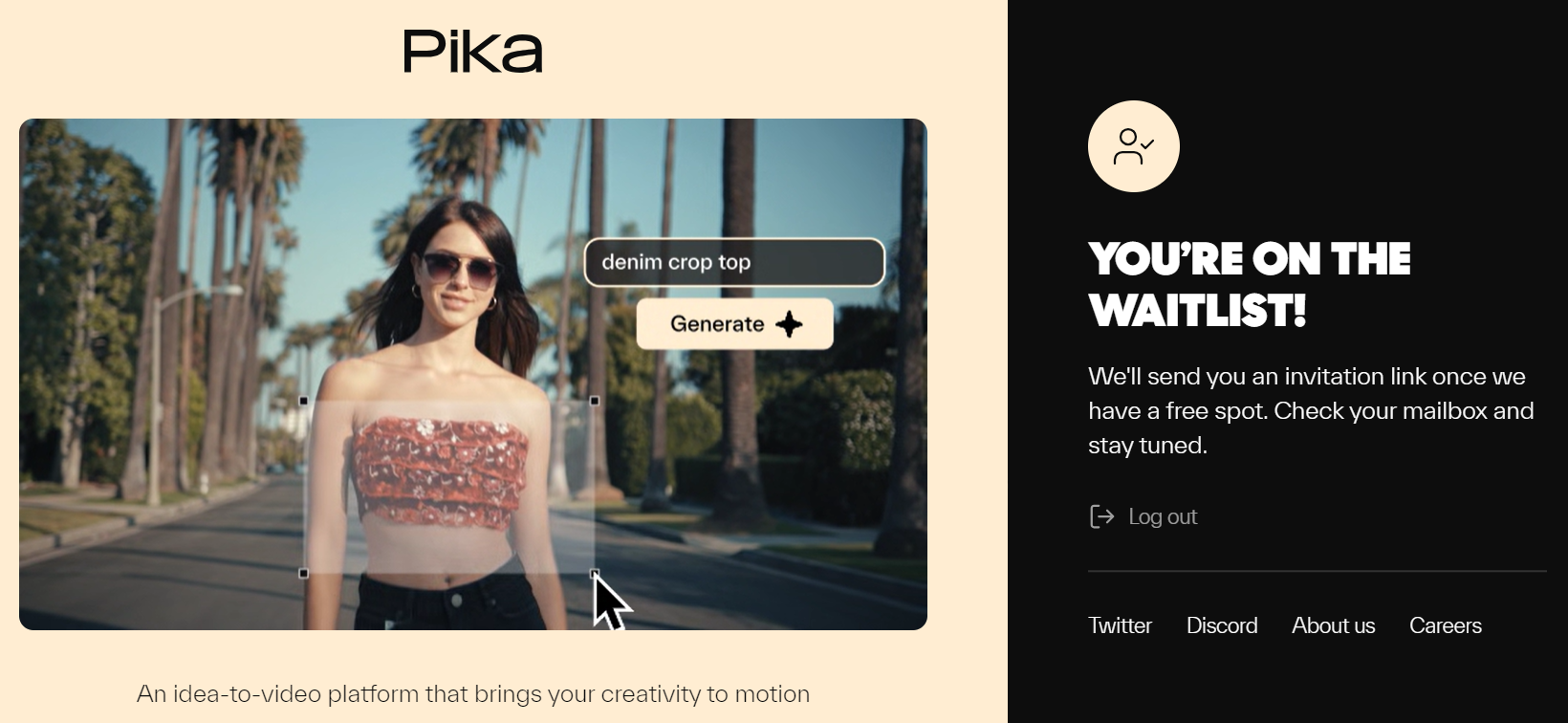
- Pika.art, the hot video-generation company, has raised funding. I’ve seen actual generated videos, and they fall quite short of the promo video — it’ll probably be hard to put to real use on independent e-commerce sites for now. Still, I signed up to play around with it.
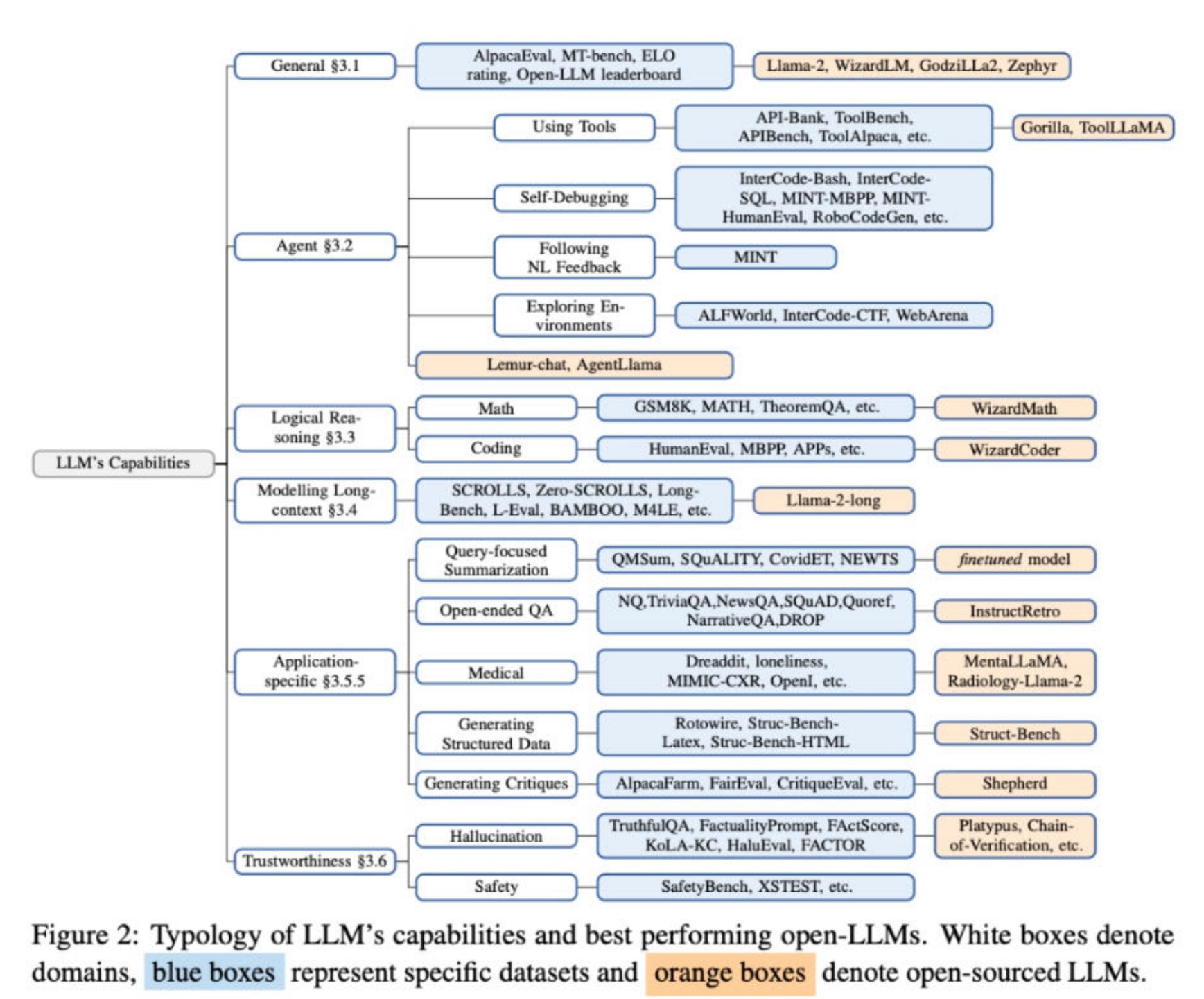
- LLM capability domains and the best open-source LLMs in each. White boxes represent domains, blue boxes represent specific datasets, and orange boxes represent open-source LLMs.
- The AI Agents Boom: Software 2.0 Takes Shape, and OpenAI’s Next Step (Chinese) — from the personal blog of Lilian Weng, currently Head of Safety Systems at OpenAI.
- Devv.ai is hands down the best AI + search site for programmers I’ve used. Both its GitHub repository and how it works are worth reading.
- The New York Times: Sam Altman and the future challenges of AI: The recent internal revolt at OpenAI that tried to oust Altman failed, but it showed the risks in AI development. The author argues that government regulation can’t keep up with AI’s progress, and that it’s worrying for Silicon Valley companies to steer AI’s future. She suggests OpenAI shouldn’t focus only on technology and profit, but should also consider human values and ethics.
Jindouyun SEO Case Study — Apparel DTC Website
Competition has been fierce around Black Friday and Cyber Monday. But after the previous phase of SEO optimization by Jindouyun SEO, an apparel DTC independent website now ranks #1 for its key high-traffic core keywords! In SEMrush, organic traffic is up 80% (from about 3k to 6k), and the number of ranking keywords is up 100%!
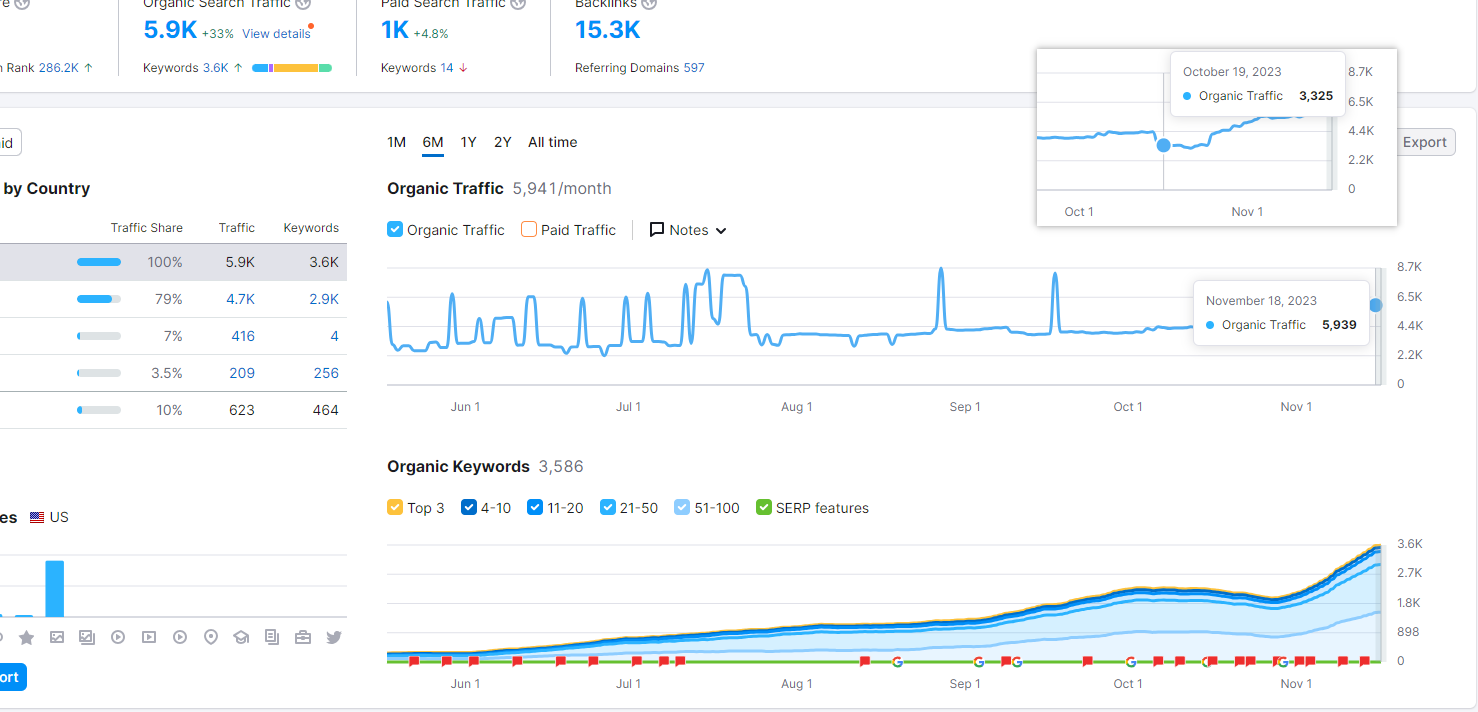
Apparel is one of the hardest niches for SEO. Yiguo Technology’s Jindouyun SEO delivered a complete SEO service for the client’s website — strategic planning, performance (code) optimization, high-quality content, and high-quality backlinks — helping the client stand out in the crowded apparel market!
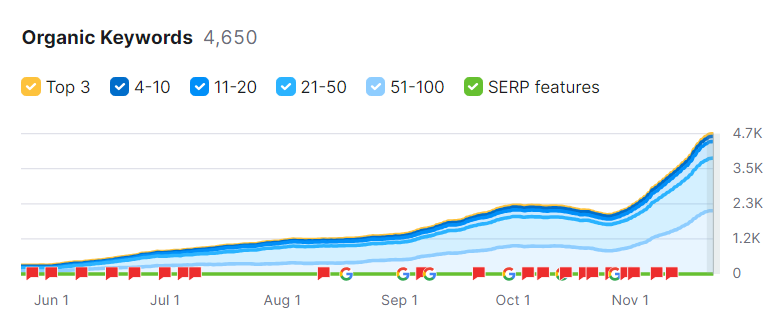
Following up last week, the number of ranking keywords is still climbing. This SEO project has run for about 6-8 months, which is fairly normal, and it clearly got a boost from the November core update. I can’t share the GSC data, but I can say the gains there are even larger than what SEMrush shows:
Google SEO & AI Weekly Roundup + Linus's Take (Dec 5, 2023)
https://www.linusseo.com/en/google-seo-and-ai-newsletter-linus-thoughts-231205/